Best Time to Visit Dahab: Weather and Sea Month by Month
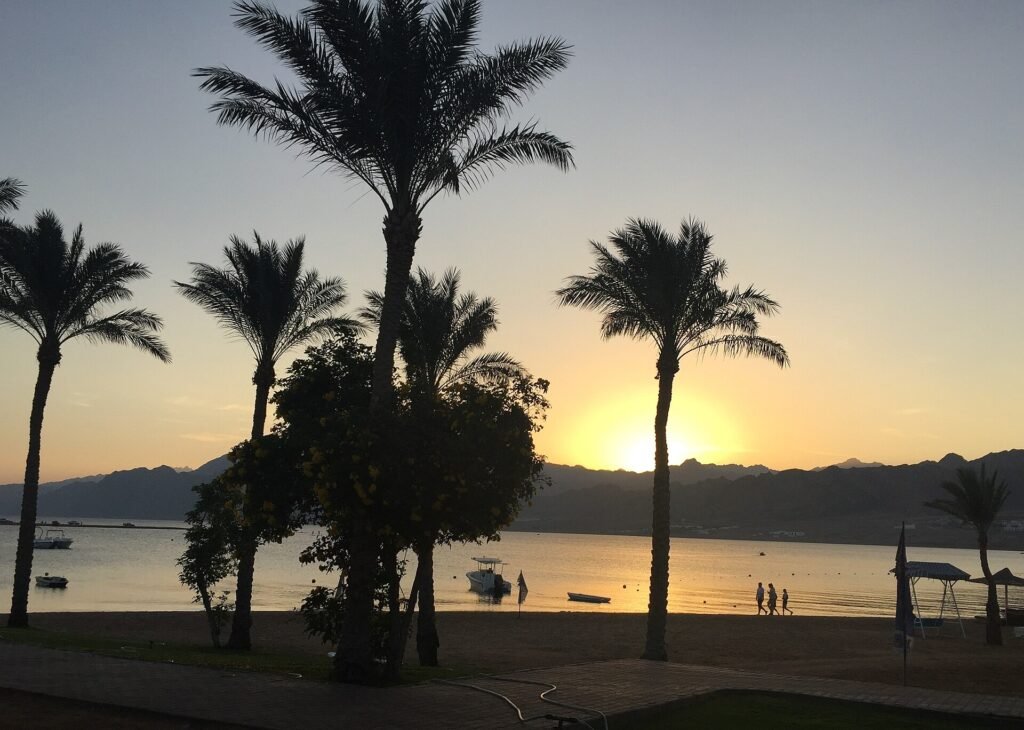
The best time to visit Dahab for most travellers is October to May. Days are warm rather than hot, the sea stays at roughly 22 to 26 °C, and the desert and Mount Sinai are comfortable to walk. March, April, October and November are the easiest all-round months. June to September is very hot on land, with average highs around 34 to 35 °C, but the sea is at its warmest and the long days suit beach and boat trips.
Dahab is sunny for almost the whole year and gets very little rain, so the real questions are heat, wind and how cold the nights get in the mountains. This guide goes month by month, then season by season, and shows which day trips fit each time of year. All figures are long-term averages, not forecasts, so check the forecast before you go.
Best time to visit Dahab: the short answer
Different trips have different best seasons. Here is the quick version, based on what you want to do.
- Snorkelling and beach days: any month. The sea is warmest from July to October; in winter it is cooler and many people wear a thin wetsuit.
- Mount Sinai sunrise: October to May is the most comfortable for the walk. In winter the summit is cold at night, so bring serious warm layers.
- Desert and canyon trips: October to May. In June to September the canyon trips start early, while the walls still give shade.
- Kitesurfing and windsurfing: spring to autumn, when the wind is most regular. Summer is the windiest.
- Doing a bit of everything: March, April, October and November give you warm sea, warm days and cool enough mornings for the desert.
If Mount Sinai is the main reason for your trip, look at the Mount Sinai sunrise trip from Dahab; you can check the time, what’s included and the current price on the trip page and book there on WhatsApp. The climb is possible in every season, but the kit you need changes a lot between July and January.
Dahab weather by month (long-term averages)
The table below uses long-term averages for Dahab from Climate-Data.org (air temperatures for 1991 to 2021, sunshine for 1999 to 2019, and the site’s average sea temperature, for which no period is given), rounded to whole numbers. Wind notes are based on kitesurf and windsurf guides for Dahab. These are long-term averages: check the forecast before you go, because any single week can be warmer, cooler or windier. Whatever month you pick, our Dahab full-day trip covers the desert and the sea in one day.
| Month | Avg high (°C) | Avg low (°C) | Sea (°C) | Sun (hrs/day) | Wind and notes |
|---|---|---|---|---|---|
| January | 20 | 12 | 22 | 9 | Coolest month; wind comes in spells of a few days; cold nights at Mount Sinai |
| February | 22 | 13 | 22 | 10 | Coolest sea of the year; wind in spells |
| March | 25 | 16 | 22 | 11 | Warming days, cool sea; wind starts to pick up |
| April | 28 | 19 | 22 | 12 | Warm and dry; good all-round month |
| May | 32 | 22 | 24 | 12 | Getting hot; regular wind; very strong sun |
| June | 34 | 25 | 25 | 13 | Hot; windy most days |
| July | 35 | 27 | 27 | 12 | Hottest stretch; windy most days |
| August | 35 | 27 | 27 | 12 | Hottest stretch; warmest sea |
| September | 33 | 25 | 27 | 11 | Still hot; sea still very warm |
| October | 30 | 22 | 26 | 10 | Heat easing; warm sea; good all-round month |
| November | 25 | 18 | 25 | 10 | Pleasant days, warm sea, cooler evenings |
| December | 21 | 14 | 23 | 9 | Mild days, cool evenings; cold nights at Mount Sinai |
Two things stand out. First, the sea changes much less than the air: it moves between about 22 °C in late winter and about 27 °C in late summer. Second, the hottest months on land are also the warmest in the water, so summer is uncomfortable in the desert but fine for sea trips.
Other data sets give slightly different numbers. Weather2Travel, for example, shows hotter summer highs (about 37 °C in July and August) and cooler winter lows (about 9 °C in January). Treat the table as a guide to the pattern, not an exact promise.
Dahab weather: sun, rain and UV
Dahab has a hot desert climate. Long-term averages show around 9 hours of sunshine a day in midwinter and 12 to 13 hours in midsummer. Rain is rare: Climate-Data.org puts total rainfall at around 30 mm a year, with about one rainy day a month in the cooler months and none from June to September.
The sun is the thing to plan for. Weather2Travel lists the maximum UV index as very high from March and extreme from May to August. Even on a cool winter day, an hour on a boat or a snorkel session on the reef can burn your back. Cover up with a hat and a long-sleeved shirt, and take water on every trip.
Rain matters mostly in the mountains. On the Wadi Weshwash and Ras Shitan trip, the freshwater pools in the canyon are fed by winter rain, so water levels change through the year. Check the time, what’s included and the current price on the trip page, and book there on WhatsApp.
Sea temperature in Dahab
The Gulf of Aqaba around Dahab stays warm enough to swim in all year. Long-term averages run from about 22 °C in winter, with February and March the coolest, to about 27 °C in August. The sea is often warmer than the air on a January evening.
Do you need a wetsuit?
In summer most people snorkel and swim in normal swimwear, often with a rash vest for sun protection. In winter the water feels cool after a while, especially when the wind is blowing and you get out wet. Windsurf and kitesurf guides for Dahab suggest a 3/2 mm to 4/3 mm wetsuit in winter for long sessions. For a short snorkel, a long-sleeved rash vest is enough for many people.
Sea trips by season
Sea trips work in every season. The Blue Hole reef wall, Three Pools and the yacht days work in January as well as in August; the difference is how long you want to stay in the water. For the best spots and how to get in at each, see our Dahab snorkeling spots guide, and for all the boat and reef options see the Dahab sea trips page.
Wind in Dahab
Wind is the part of Dahab weather people forget. It is the reason the town is known for windsurfing and kitesurfing, and it affects snorkelling and boat days more than temperature does.
Direction and strength
The wind usually blows from the north or northwest, funnelled down the Gulf of Aqaba. It is windy in every season, but the pattern changes. In summer it blows on most days, and windsurf guides describe summer averages of around force 5 to 6, sometimes stronger.
In winter the wind tends to come in spells of a few days, with calmer days between. Boards.co.uk names July and August as the windiest months, and IKSURFMAG describes wind on most days from March to November.
What wind means for your trips
For snorkelling, calm water is better: the surface is flatter, it is easier to breathe through a snorkel, and the visibility is clearer. On windy days, choose sheltered spots or go when the forecast shows the lightest wind. On the Full-Day Yacht, the captain picks the snorkel stops on the day by wind and sea for exactly this reason.
For kitesurfing and windsurfing, the regular summer wind is the attraction. The Dahab Lagoon at the south end of town is a wide, shallow bay with flat water and steady wind, and the schools there rent gear and give lessons. The shallow water suits beginners.
Dahab in winter (December to February)
Dahab in winter is mild on the coast. Average highs are around 20 to 22 °C, with lows around 12 to 14 °C. Days are usually sunny and good for walking around town, but evenings are cool enough for a jacket, especially by the water when the wind blows.
Mount Sinai in winter
The big difference in winter is in the mountains. The summit of Mount Sinai is at 2,285 m, and nights around St Catherine are far colder than on the coast. Weather2Travel‘s long-term averages for St Catherine show winter lows around 0 to 2 °C in December to February, and the summit, higher up and exposed, can be colder still. Check the forecast before you go.
The Mount Sinai sunrise trip picks you up at 22:00, you climb at night with a Bedouin guide, and you wait for sunrise at the top. That means hours outdoors at the coldest time of night. Bring a warm jacket, hat, gloves, a head torch, walking shoes, water, a snack and your passport. Bedouin huts on the way sell tea and snacks and rent blankets.
Remember that you need a full Egypt visa for St Catherine and Mount Sinai; the free Sinai-only entry stamp does not cover it. For the two routes up the mountain and how hard each one is, read our guide to the Mount Sinai camel path and Steps of Repentance, and for everything else see the Mount Sinai hike guide.
Desert trips in winter
Winter is a good season for the desert. The canyons are cool to walk, and you can spend the whole day outside without hiding from the sun. Pack a light layer for the shade in the narrow parts of the canyons, and a warm layer for any evening out in the desert, such as the Bedouin night at Jabal Tuwailat.
Dahab in spring (March to May)
For many people, spring is the best time to visit Dahab. March and April bring warm, dry days, with average highs from about 25 to 28 °C. The sea is still at the cooler end of the year, around 22 °C, so it is fresh rather than warm.
By May it is getting hot, with average highs around 32 °C, and the sun is very strong. The wind builds through spring, which is good news for kitesurfers and less so for snorkellers who like flat water.
Spring suits nearly every trip. Mount Sinai nights are still cool but less harsh than in January, and the canyons are comfortable before the summer heat. See our comparison of the White Canyon and Colored Canyon if you are deciding which desert trip to do.
Dahab in summer (June to September)
Summer in Dahab is hot. Average highs are around 34 to 35 °C, nights stay warm, and the UV index is extreme. Some data sets put summer highs a few degrees higher. Inland, in the desert, it is hotter than on the coast.
On the other hand, the sea is at its warmest, around 25 to 27 °C, and the days are long. Summer is a good season if your plans are mostly in the water: snorkelling, boat days, and kitesurfing in the steady wind.
How to plan summer days
- Desert trips: go early. In June to September, canyon trips start early while the walls still give shade. The Colored Canyon and White Canyon trip starts at 8:30, with lunch and Bedouin tea at Ein Khudra oasis; check the time, what’s included and the current price on the trip page, and book there on WhatsApp.
- Sea trips: these are the natural summer choice. Full-day yacht, Blue Hole and Abu Galum, Three Pools: all keep you near or in the water.
- Middle of the day: rest in the shade. The hours around midday are the time for a long lunch on the promenade, not a walk.
- Evenings: the sunset yacht with dinner (16:00 to 21:00) and the Bedouin night (20:30 to midnight) fall in the cooler end of the day.
- Mount Sinai: the night climb is much milder than in winter, but the summit is still cooler than the coast. Bring a layer.
The All-in-One day (Mondays and Fridays, 6:00 to 19:00) also fits summer reasonably well, because it does the desert part first in the morning and moves to the sea later in the day.
Dahab in autumn (October and November)
Autumn is the other strong candidate for the best time to visit Dahab. The heat eases through October, with average highs around 30 °C, falling to about 25 °C in November. The sea has had all summer to warm up and is still around 25 to 26 °C, warmer than in spring.
That combination makes October and November good months for travellers who want both sea and desert. You can snorkel without a wetsuit, walk the canyons without the summer heat, and climb Mount Sinai without the deep cold of January. Evenings in November get cooler, so pack a light jacket.
Which trips fit which season
This table matches each Dahab Go trip to the season it suits best. It shows when conditions are most comfortable, not when trips run; check each trip page for current days and times.
| Trip | Most comfortable | Notes by season |
|---|---|---|
| Mount Sinai Sunrise + St Catherine | October to May | Very cold at the summit at night in winter; milder in summer, still bring layers |
| Colored Canyon + White Canyon + Ein Khudra | October to May | In summer, early starts while the walls give shade |
| Wadi Weshwash + Ras Shitan | October to May | Pools fed by winter rain; water levels change through the year |
| Blue Hole + Abu Galum + Blue Lagoon | Any season | Warmest water July to October; calm days best for snorkelling |
| Three Pools + Beach Buggy to Wadi Gnai | Any season | Calm days best at Three Pools; scarf or buff for the dust |
| Full-Day Yacht | Any season | Captain picks spots by wind and sea |
| Semi-Submarine Reef Trip | Any season | No swimming needed; good in winter for non-swimmers |
| Sunset Yacht with Dinner | Any season | Cool evenings in winter; bring a layer |
| Bedouin Night at Jabal Tuwailat | Any season | Bring a warm layer |
| Dahab All-in-One | Any season (runs Mondays and Fridays only) | Desert first in the morning, sea in the afternoon |
You can browse the desert options together on the Dahab desert trips page, and every trip is listed on all Dahab Go trips. On each trip page you can check the time, what’s included and the current price, and book there on WhatsApp.
What to pack by season
Packing for Dahab is simple in summer and needs more thought in winter, mostly because of the mountains and the evenings.
- All year: sunscreen (mineral sunscreen is kinder to the reef), hat, sunglasses, swimwear, a rash vest, a refillable water bottle, cash for entry tickets paid on site, and your passport for checkpoints.
- Winter extras: a warm jacket, hat and gloves for Mount Sinai, a fleece or sweater for evenings, and a thin wetsuit if you plan long sessions in the water.
- Summer extras: light, loose long sleeves, more water than you think you need, and a scarf or buff for dusty desert drives.
- For the desert: grippy shoes for the canyons, and shoes that can get wet for Wadi Weshwash.
Once you have worked out the best time to visit Dahab for your plans, browse all trips from Dahab and pick the ones that fit your dates.
Planning the climb? Read how high Mount Sinai is and how it compares with Egypt’s other peaks. Coming with children? See Dahab with kids.
Trips in this guide
 Mount Sinai Sunrise + St. CatherineA night hike up Mount Sinai for sunrise, then down past St Catherine’s Monastery.See the trip
 Wadi Weshwash + Ras ShitanSwim in the canyon pools of Wadi Weshwash, then spend the afternoon at Ras Shitan.See the trip
FAQ
What is the best month to visit Dahab?
For a mix of sea and desert, April, October and November are hard to beat. Days are warm, the sea is pleasant, and the desert and Mount Sinai are comfortable to walk. If you only care about the sea, July to October has the warmest water. If you prefer cool weather for hiking, December to February works, with warm layers for the mountains.
Is Dahab too hot in summer?
It is very hot on land, with average highs around 34 to 35 °C and extreme UV. It is manageable if you plan around it: sea trips in the day, desert trips that start early, rest at midday, and night or sunset trips in the evening. If you dislike heat and want long desert walks, choose October to May instead.
Is Dahab good in winter?
Yes. Dahab in winter is mild and sunny on the coast, with average highs around 20 to 22 °C and a sea around 22 °C. It is a good season for the desert and canyons. Evenings are cool and Mount Sinai is cold at night, so pack a warm jacket, hat and gloves. Many people wear a thin wetsuit for long snorkels.
How warm is the sea in Dahab?
Long-term averages put the sea at about 22 °C in winter, with February and March the coolest, rising to about 27 °C in August. It stays warm enough to swim all year. In summer you can snorkel in swimwear; in winter a rash vest or thin wetsuit makes longer sessions more comfortable. Check current conditions before you go.
When is the best time to climb Mount Sinai from Dahab?
October to May is the most comfortable season for the walk. In winter, though, the summit is cold at night, with St Catherine averages near freezing in midwinter, so bring proper warm layers. In summer the night climb is milder. Check the St Catherine forecast before you go. The trip picks you up at 22:00, and you need a full Egypt visa, not the Sinai-only stamp.
When is the windiest time in Dahab?
Summer is the windiest period, with wind on most days from the north or northwest. Windsurf guides name July and August as the windiest months. In winter the wind comes in spells of a few days with calmer days between. Kitesurfers and windsurfers come for the regular summer wind; snorkellers do best on calm days.
Does it rain in Dahab?
Very rarely. Long-term averages show around 30 mm of rain a year or less, falling on about one day a month in the cooler months and none from June to September. Rain in the mountains in winter can fill the pools in canyons such as Wadi Weshwash, so water levels on that trip change through the year.
More Dahab guides
 Dahab itinerary: 3, 5 or 7 daysDay-by-day plans that mix the sea, the desert and Mount Sinai.Read the guide
 Dahab snorkeling spotsThe best reefs to snorkel from the shore, and how to reach each one.Read the guide
Photo credits
- Palm trees against the sunset over the lagoon in Dahab — Mc Paskal, CC0
- A white day boat moored off the coast of Dahab, with the mountains behind — Grand Parc – Bordeaux, France, CC BY-SA 2.0
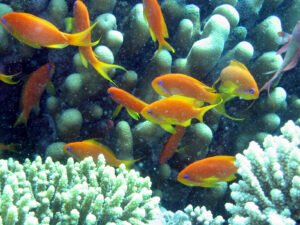
- Orange anthias fish over coral on a Dahab reef — Photo2222 (English Wikipedia), Public domain