Blue Hole Dahab Snorkeling Guide: Safety, Depth and What to Expect
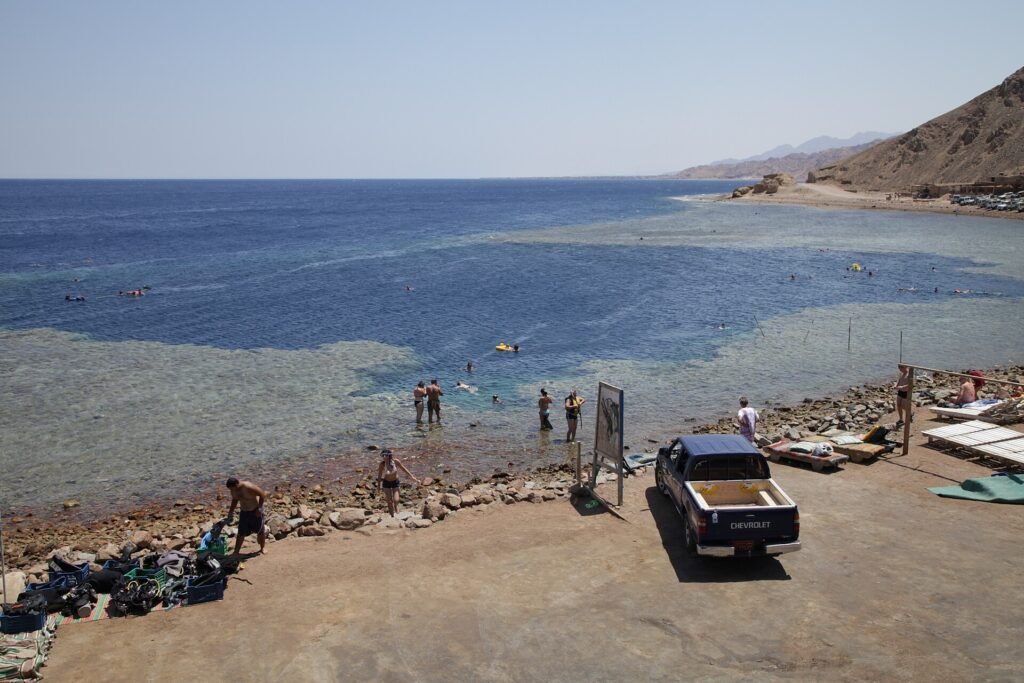
Blue Hole Dahab snorkeling is generally safe for confident swimmers who stay at the surface along the reef wall, go with a buddy or guide and get in only when the sea is calm. The danger you may have read about belongs to deep divers who swim down toward the Arch, far below any snorkeler. This guide covers the depth, the entry points, currents, gear and what you will see.
If you want the snorkel stop organised for you, the Blue Hole, Abu Galum and Blue Lagoon day trip starts with the Blue Hole reef wall and then carries on by zodiac to Ras Abu Galum. The rest of this page is the practical side: what to expect in the water and how to do it sensibly.
What the Blue Hole Is and Where to Find It
The Blue Hole is a round sinkhole in the reef on the Gulf of Aqaba coast, about 10 km north of Dahab town. From the shore it looks like a dark blue circle cut into the pale reef top. The hole itself is more than 100 m deep, but the reef wall that rims it starts only a few metres from the shore. That is why snorkeling here needs no boat.
The site lies inside the Abu Galum Nature Reserve, a protected area declared in 1992. The coastal road runs north from Dahab and ends just past the Blue Hole. North of that point there is no road, which is why the trip continues by zodiac to Ras Abu Galum and the Blue Lagoon.
Along the shore you will find a row of simple cafés with loungers, cushions and shade. Divers kit up here, snorkelers leave their bags here, and most people eat lunch here. Public toilets and showers are also available at the site.
Blue Hole Dahab Depth, the Arch and the Saddle
The numbers you see quoted for the Blue Hole often mix up three different features. Here is how they fit together, using figures published by Wikipedia, Snorkeling Report and the Dahab dive centre Circle Divers.
| Feature | Depth | What it means for snorkelers |
|---|---|---|
| The Saddle | About 6 m at its deepest, shallower in places | A shallow gap in the outer rim that opens to the sea. Good coral and visible from the surface. |
| The reef wall around the hole | From the surface downward | This is where you snorkel. The top of the wall is just below you, then it drops away. |
| The Blue Hole floor | Just over 100 m | Not something you will see. The water simply turns deep blue below you. |
| The Arch ceiling | About 55 m | A tunnel about 26 m long through the reef to the open sea. Far beyond recreational diving limits. |
| Seaward side of the Arch | About 120 m, then dropping much deeper | Open sea outside the reef. Irrelevant to snorkeling. |
Why the Arch matters, and why it does not affect you
The Arch is the reason the Blue Hole has a hard reputation. Its ceiling sits at around 55 m, well past the 40 m limit for recreational scuba diving. Divers who try to swim through it on a single tank of air face nitrogen narcosis, a long horizontal swim, an inward current and decompression stops on the way up.
Local dive operators now require technical diving certification for the Arch. As a snorkeler you stay in the top metre or two of water, so none of this applies to you. The only connection is that you will see divers below you and bubbles rising along the wall.
The Saddle
The Saddle is the shallow, coral-covered opening on the seaward side of the hole. Divers coming from the Bells finish their dive by crossing it in shallow water. For snorkelers it is often the most colourful part of the site because the coral grows close to the surface and catches the light.
Is the Blue Hole in Dahab Safe?
For snorkelers who follow basic rules, the risk is low, but it is not a beginner’s pool. Snorkeling Report rates it as an advanced snorkeling site because the water is deep from the first step. The Blue Hole also has a long record of diver deaths, and the exact number has never been accurately recorded. Many of them are linked to deep dives toward the Arch by divers without the training or equipment for that depth.
On the rocks along the shore path you will pass memorial plaques for divers who died here. They are worth a quiet moment. They are also a reminder that the sea here is deep and open, even when it looks like a calm pool.
Some of the deaths counted at the site were snorkelers at the surface, not divers, and there is no lifeguard on duty. Take the rules below seriously.
Simple rules that make Blue Hole Dahab snorkeling safe
- Never snorkel alone. Swim with a buddy or stay close to your guide.
- Stay near the wall and the shore side. Do not swim out over the open middle of the hole or out past the Saddle into the open sea. The only exception is the Bells route described below, with a guide and on a calm day.
- Do not freedive unless you are trained. Many freedivers train here because the water is deep and sheltered. Breath-hold dives without training and a trained buddy are dangerous.
- Wear a vest if you are a weak swimmer. There is nowhere to stand once you leave the entry point.
- Check the water before you get in. If the sea is choppy, the wind is strong or you feel unsure, stay on the shore or pick a calmer site.
- Know your limits. Get out before you are tired, not after.
Blue Hole Dahab Snorkeling: Entry Points
There are two ways into the water, and they suit different swimmers.
The main entry at the Blue Hole
The main entries are directly in front of the cafés and lead straight into the Blue Hole, a few metres from the shore. You step off a rocky platform and the reef edge is right there. It is easy to find: follow the people with masks.
This is the simplest option. You can swim along the inner wall, look down into the blue, stay within easy reach of the exit and come back whenever you like. It suits beginners who are comfortable in deep water, children with an adult right beside them and anyone who wants a short swim.
The Bells entry
The Bells is a second entry about 150 m north of the Blue Hole, along a path on the shore. Divers use it to drop into a narrow chimney in the reef, then follow the wall south back to the Blue Hole. The name is usually explained by the shape of that chimney, or by the sound of divers’ tanks knocking against its walls.
Snorkelers can use the same idea at the surface. The usual current along this stretch of coast runs from north to south, so entering at the Bells lets you drift with it along the drop-off and back into the Blue Hole through the Saddle. The coral along this section is often in better condition than at the main entry.
This route is for confident swimmers. The wall drops steeply beside you and you are swimming over open, deep water. Do it with a guide or experienced buddy, and only on a calm day.
Currents, Wind and Sea Conditions
Inside the Blue Hole the water is usually calm and clear. The rim of the reef shelters it from the open sea, which is why freedivers like it for training. Outside the rim, along the stretch toward the Bells, you can meet current.
Wind matters more than anything else in Dahab. The wind funnels down the Gulf of Aqaba, so Dahab is windier than most Egyptian coastal towns. Kitesurf guides describe March to November as the windiest months, with winter wind coming and going in spells of a few days.
For snorkelers this means two things. Mornings can be calmer than afternoons, though not on every day, and a windy day can turn the surface choppy enough to make breathing through a snorkel tiring. If you are on a guided trip, your guide will judge the conditions on the day. If you are on your own, look at the water first and be ready to change plans.
What You Will See on the Reef Wall
The appeal of the Blue Hole for snorkelers is the contrast. On one side you have a living coral wall with fish all over it. On the other you have deep blue water with no visible bottom. It feels very different from shallow lagoon snorkeling.
Along the wall you can expect the usual Red Sea reef life in large numbers. Snorkel guides to the site list clouds of small orange anthias (often called sea goldies), shoals of surgeonfish, Red Sea bannerfish, butterflyfish, parrotfish, and Red Sea clownfish living in sea anemones. Lionfish and scorpionfish rest on the coral, and the Arabian Picasso triggerfish is a common sight.
Look closely at the coral itself too. The Saddle area has some of the most colourful hard coral at the site because it sits so close to the surface. Keep your distance from everything you see: look, do not touch.
Gear for Snorkeling the Blue Hole
You do not need much, but the right few things make a real difference.
- Mask and snorkel. A snorkel mask is included on the Dahab Go Blue Hole trip. Masks, fins and snorkels can usually also be rented at the site.
- Fins. Bring your own if you have them. They help a lot if there is any current, and they let you swim slowly instead of splashing.
- A snorkel vest or life jacket. Strongly recommended for weak or nervous swimmers, because the water is deep right from the entry. If you need one, ask about it when you book.
- Rash guard or thin wetsuit. Useful against the sun on your back and for warmth in the cooler months.
- Water shoes. The entry platforms are rocky and can be slippery. Do not wear them to stand on coral: you should not stand on coral at all.
- Reef-safe sunscreen. Put it on well before you swim, and cover up with clothing where you can.
- Towel, water and cash. Cash covers the entry ticket, drinks and food at the cafés.
Best Time of Day and Season
Early in the day is often the better time to snorkel. The water can be calmer, the light is good for photos and you get in before the busiest part of the day. On the Dahab Go trip the Blue Hole is the first stop, which works well for this reason.
You can snorkel here in any month. In the cooler months a thin wetsuit makes longer swims more comfortable. For a month-by-month view of air and sea conditions, see our guide to the best time to visit Dahab.
Visiting hours are limited. Opening hours are roughly 8:00 to 16:00, with visitors asked to be out of the water by 16:00; check before you go. Treat that as a guide only and check the current hours before you go.
Entry Ticket, Checkpoint and Facilities
The Blue Hole is in a protected area, and there is an entry ticket (the protectorate fee) paid on site in cash. The amount changes from time to time, so check the current amount before you go and bring cash. Card payment should not be relied on. On the Dahab Go trip this ticket is not included in the trip and is paid on the day.
There is a checkpoint on the road north of Dahab. Carry your passport whenever you leave town in Sinai.
Facilities at the site are basic but enough for a day: shoreline cafés with loungers and shade, food and drinks, toilets and showers. There is little natural shade on the rocks themselves, so the cafés are where you wait between swims.
Planned changes at the site
In August 2026 Egyptian news outlet Ahram Online reported a proposal to redevelop the Blue Hole with a visitor gateway, controls on vehicles and visitor numbers, and an upgrade of the road from Dahab. The plan was at the review stage with no published timetable. Facilities, access rules and fees may change, so check before you go.
Snorkeling the Blue Hole on a Day Trip from Dahab
You can reach the Blue Hole by taxi and snorkel on your own. A guided day removes the guesswork about entry points and conditions, and it lets you continue north, where the coast has no road.
The Blue Hole snorkeling trip with Abu Galum and the Blue Lagoon runs from 9:00 to 17:00, about 8 hours. It works like this:
- Hotel pickup anywhere in Dahab and the drive north to the Blue Hole.
- Snorkeling on the Blue Hole reef wall from the beach, with your guide.
- A zodiac ride north along the coast to Ras Abu Galum, a protected area with no road.
- Free time at the Blue Lagoon: a shallow bay with white sand, turquoise water and mountains behind.
- The return to Dahab and the drive back to your hotel.
Included are hotel transfers, the guide, a snorkel mask and the zodiac ride. Not included is the Blue Hole entry ticket, which is the protectorate fee paid on site in cash. Bring swimwear, a towel, sunscreen, water, cash and your own fins if you have them. You can check the time, what’s included and the current price on the trip page and book there on WhatsApp. There is no prepayment; you pay in cash on the day.
For more on the second half of the day, including walking and camel routes to the lagoon, read our guide to the Blue Lagoon and Ras Abu Galum.
If You Are Not a Confident Swimmer
The Blue Hole is deep water from the first step. If that makes you uneasy, it is not a failure to choose something gentler. Dahab has good options for every level.
Calmer snorkeling
Three Pools, a short drive south of Dahab, has shallow lagoons inside the reef with calm water and coral close to shore. The Three Pools snorkel and beach buggy trip pairs it with a desert drive to the Wadi Gnai palm oasis. You can check the time, what’s included and the current price on the trip page and book there on WhatsApp.
Snorkeling from a yacht
On the full-day yacht trip the captain picks snorkel stops on the day according to the wind and sea, and you can stay on board whenever you prefer. Lunch and soft drinks are included.
Seeing the reef without swimming
The semi-submarine reef trip lets you watch coral and fish through windows below deck, with no swimming needed. It suits children, older travellers and non-swimmers. For a full list of reef sites and how to reach them, see our guide to Dahab snorkeling spots, or browse all sea trips from Dahab.
Reef Etiquette at the Blue Hole
The Blue Hole is a busy site, shared every day by snorkelers, divers and freedivers, and the coral pays for that. A few habits help it last.
- Do not stand on, kick or hold the coral. Keep your fins up and away from the wall.
- Do not touch or chase fish, and never feed them.
- Enter and exit only at the proper platforms.
- Use reef-safe sunscreen, and rely on a rash guard more than on lotion.
- Take all your rubbish back with you, including small things like bottle caps.
- Give divers and freedivers space. They may be coming up from below.
For more ideas on what to do around town between sea days, see our things to do in Dahab guide.
Comparing bases for your trip? See Dahab vs Sharm el Sheikh.
If you want to dive the Blue Hole rather than snorkel it, read our guide to diving in Dahab for the usual dive route, the certification you need and the safety timing.
Trips in this guide
 Blue Hole + Abu Galum + Blue LagoonSnorkel the Blue Hole, then go up the coast to Abu Galum and the Blue Lagoon.See the trip
 Three Pools + Beach Buggy to Wadi GnaiSnorkel the Three Pools reef, then drive a beach buggy to Wadi Gnai.See the trip
 Full-Day Yacht on the Red SeaA full day on a yacht, with swimming and snorkelling over the reef.See the trip
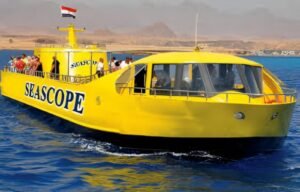 Semi-Submarine Reef TripSee the reef and fish through windows below deck. No swimming needed.See the trip
FAQ
How deep is the Blue Hole in Dahab?
The Blue Hole is a little over 100 m deep. The Arch, a tunnel through the reef to the open sea, has its ceiling at about 55 m. The Saddle, the shallow opening on the seaward rim, is only about 6 m deep. Snorkelers stay at the surface along the reef wall, so the depth below you does not change what you do. It only changes the colour of the water.
Can beginners snorkel the Blue Hole?
Yes, if they can swim, stay at the main entry near the cafés and swim with a buddy or guide on a calm day. The water is deep from the first step, so weak swimmers should wear a snorkel vest or life jacket. The Bells route along the outer reef is better left to confident swimmers. If you are unsure, Three Pools or the semi-submarine are gentler options.
Is there a fee to snorkel at the Blue Hole?
Yes. There is an entry ticket for the protected area, paid on site in cash. The amount changes, so check the current amount before you go and carry cash. On the Dahab Go Blue Hole trip this ticket is not included in the trip and is paid on the day. Snorkel gear, drinks and food at the cafés are separate costs.
Do I need fins for Blue Hole Dahab snorkeling?
Fins are not required, but they help. Along the Bells route there can be a north-to-south current, and fins let you swim slowly and in control rather than tiring yourself. Bring your own if you have them; rentals are usually available at the site. Keep your fins away from the coral at all times, especially near the wall.
When is the best time of day to snorkel the Blue Hole?
Morning is often best. The water can be calmer before the wind picks up, the light is good and the site is quieter. Visiting hours are limited, roughly daytime only, with visitors asked to leave the water by late afternoon. Check the current hours before you go, and always look at the sea state before getting in.
Can I combine the Blue Hole with the Blue Lagoon?
Yes. The road ends just north of the Blue Hole, so the Blue Lagoon at Ras Abu Galum is reached by boat, on foot or by camel along the shore. The Dahab Go day trip snorkels the Blue Hole first, then takes a zodiac north to the lagoon for free time before returning to Dahab.
More Dahab guides
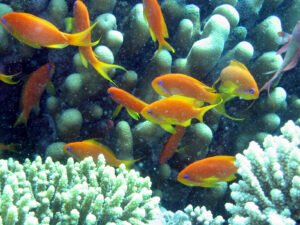 Dahab snorkeling spotsThe best reefs to snorkel from the shore, and how to reach each one.Read the guide
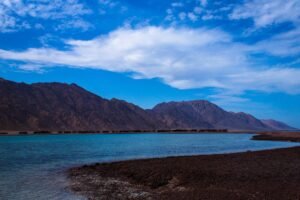 Blue Lagoon and Ras Abu GalumThe protected coast north of the Blue Hole, and what to expect there.Read the guide
Photo credits
- Snorkellers on the reef at the Blue Hole beach in Dahab — Grand Parc – Bordeaux, France, CC BY-SA 2.0
- The Three Pools snorkelling spot south of Dahab, with boats on the shore — Hagar Magdy, CC BY-SA 4.0
- Orange anthias fish over coral on a Dahab reef — Photo2222 (English Wikipedia), Public domain
- Turquoise water of the Blue Lagoon in the Ras Abu Galum protected area, with the Sinai mountains behind — Mohamed3171979, CC BY-SA 4.0