White Canyon vs Colored Canyon: Which Dahab Canyon to Visit
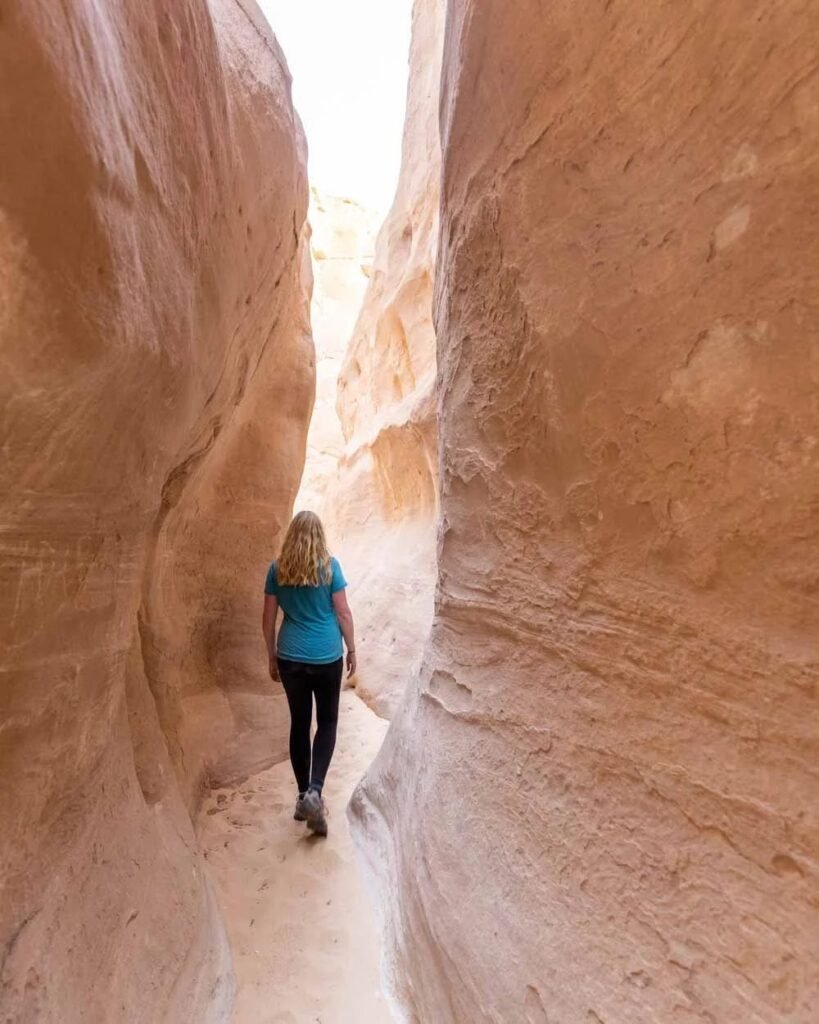
The short answer on White Canyon Dahab vs Colored Canyon: the Colored Canyon is a narrow gorge with walls striped red, yellow and purple, while the White Canyon is a pale, more open valley with a ladder descent and a walk out toward the Ein Khudra oasis. If you can only see one, pick the Colored Canyon for colour and the White Canyon for space and the oasis. In practice you rarely have to choose. The two canyons are in the same desert area, and many day trips from Dahab, including ours, visit both in one day.
This guide compares them side by side: where they are, what the walking is like, how hard it is, when to go and how to stay safe. If you already know you want to see both, the Colored Canyon and White Canyon day trip covers both canyons, Mushroom Rock and tea at Ein Khudra.
White Canyon vs Colored Canyon at a Glance
Here is the short version before the detail.
| Colored Canyon | White Canyon | |
|---|---|---|
| Look | Narrow sandstone gorge, walls striped red, yellow and purple | Pale sandstone valley with smooth, light-coloured walls |
| Feel of the walk | Tight, twisting slot; in places only shoulder-wide | More open valley with some narrow sections and a ladder down a crack |
| Canyon length | The canyon itself is about 800 m; the full walking route is under 3 km | About an hour of walking (check with your guide) |
| Wall height | Up to about 40 m in places | About 12 m where the ladder goes down |
| Main challenge | Squeezing through narrow parts, climbing over fallen boulders | Climbing down the ladder, uneven sand and rock |
| Best for | Colour, texture and close-up photos | Wide views, light and the walk out to the oasis |
| Nearby | Inland from Nuweiba | Mushroom Rock and the Ein Khudra palm oasis |
Where the Canyons Are
Both canyons are in the desert between Dahab and Nuweiba, inland from the Gulf of Aqaba coast. Neither is reachable by a normal car. The last stretch is on sand and rough tracks, so trips use 4×4 vehicles such as Land Cruisers.
Colored Canyon
The Colored Canyon is a narrow sandstone gorge inland from Nuweiba. From Dahab it is about 1.5 hours by Land Cruiser, depending on the route and conditions, so check before you go. From the parking area there is a short walk to the canyon entrance.
White Canyon
The White Canyon lies in the same desert area and links the sandy plateau above with the Ein Khudra oasis below. Its walls are pale sandstone, which gives the valley its name and a very different light from the Colored Canyon. Mushroom Rock is close by, and the walk through the White Canyon leads toward Ein Khudra.
The Geology in Plain Words
Both canyons are cut into sandstone. Millions of years ago this part of Sinai was under the sea, and layers of sand were laid down and pressed into rock. After the sea retreated, rare but heavy rains sent water rushing through cracks in the rock and slowly carved them into the channels you walk through today.
The difference is colour. In the Colored Canyon, iron oxide stains the sandstone red, brown, orange and gold, and other minerals add bands of purple, yellow and white.
The White Canyon is pale sandstone with little of that colour, so in this valley the shapes stand out more than the colours. On a bright day the walls reflect a lot of light, which is part of why it feels so different from its neighbour.
What the White Canyon Dahab Walk Is Like
The White Canyon walk usually starts from the sand plateau above. You go down into the canyon through a crack in the wall, using a ladder for a drop of roughly 12 m at that point. Take your time on it, keep three points of contact and pass bags down rather than climbing with a heavy pack. Not every trip enters the White Canyon the same way, so if the ladder worries you, ask about the route when you book.
Once you are in, the valley floor is sand and rock. Expect about an hour of walking past unusual rock formations; check the timing with your guide. A few sections narrow enough that you may need to lift a backpack over your head to get through.
Toward the end you start to see green ahead. That is the Ein Khudra oasis, where the canyon opens out among palm trees. After the dry, pale rock, the palms and shade are a welcome change.
Mushroom Rock
Mushroom Rock is a rock formation near the White Canyon, named for its mushroom-like shape. It is a short photo stop rather than a walk.
What the Colored Canyon Dahab Walk Is Like
The Colored Canyon feels more enclosed. The canyon itself is about 800 m long, and the whole walking route including the approach is under 3 km. That is not far, but you will move slowly because you keep stopping to look at the walls.
The walls rise up to about 40 m in places. In the tightest parts the gap is only about shoulder-wide, and you may need to turn sideways. Fallen boulders sometimes block the floor, so expect to climb over a few, using your hands.
There are no built trails, steps or railings. The rock can be smooth and dusty, so your footing matters more than your speed. A guide who knows the canyon will show you the easiest line through each tricky spot.
Difficulty: Who Can Do the Canyons?
Neither canyon is a technical climb. You need normal fitness, steady footing and shoes with grip. The walking is on sand and rock, with narrow passages and a few short climbs.
- Fit adults and teenagers: no problem, as long as they wear proper shoes and carry water.
- Children: usually fine with an adult close by, but the ladder in the White Canyon and the boulder climbs in the Colored Canyon need a helping hand.
- Older travellers: the distances are short, but the scrambles and the ladder ask for some balance and strength. If you are unsure, ask about the route on WhatsApp before you book.
- People with bad knees or limited mobility: the climbs over boulders and the ladder are the hard parts. Think about these before booking.
- People who dislike tight spaces: the Colored Canyon has stretches where the walls are very close on both sides. The White Canyon is more open.
Photos and Light
The two canyons reward different kinds of photos. In the Colored Canyon the best shots are close up: textures, swirls of colour and the thin strip of sky between the walls. The colours look richest where reflected light bounces into the slot rather than in harsh direct sun.
On the White Canyon Dahab side of the day, the pale valley works better for wider shots, with people for scale against the pale walls. Bright sun can wash out the light rock, so slightly cloudy days or the gentler light earlier in the day help.
Practical tips: keep your phone or camera on a strap, because you will need your hands on the climbs. Dust gets everywhere, so a small bag or pouch for your camera is useful. Do not stand on the edges of drops for a picture.
Heat, Season and Timing
October to May is the most comfortable season for desert trips from Dahab. The air inland is cooler and walking in the middle of the day is pleasant. On a day trip you will mainly need a light layer for the shade.
From June to September it gets very hot inland. In summer the trick with any White Canyon Dahab trip is to go early, while the canyon walls still give shade, and to drink more water than you think you need. Summer heat in the narrow parts of a canyon can become dangerous, so the timing matters more here than on an open walk.
Winter has one extra reward: after rain, the Ein Khudra oasis is at its greenest. For a month-by-month view, see our guide to the best time to visit Dahab.
Safety in the Canyons
Canyon walking near Dahab is safe with a guide and common sense. The main risks are heat, footing and, rarely, water.
Flash floods
Rain is rare in South Sinai, but when it comes it can run off the bare mountains very fast and fill dry valleys within a short time. Flash floods are uncommon, but they are real. In 2012, for example, floods closed the Nuweiba to Dahab road for a time and blocked the Taba to Nuweiba road for several hours, as Daily News Egypt reported at the time.
Narrow canyons are exactly the wrong place to be if water arrives. Local guides watch the forecast and the sky, and the South Sinai governorate uses flood-forecasting tools. If rain is forecast, expect the trip to change or move. Never walk into a canyon on your own in unsettled weather.
Heat and sun
Carry plenty of water, wear a hat and sunglasses and use sunscreen. In summer, start early and rest in the shade. Tell your guide straight away if you feel dizzy or sick.
Footing and climbs
The most likely problems are a twisted ankle or scraped hands. Wear shoes with real grip, go slowly on the ladder and the boulders, and do not jump down drops you could climb down.
Passport and checkpoints
There are police checkpoints on the roads in Sinai. Carry your passport on any trip out of Dahab.
What to Wear and Bring
- Grippy shoes: trail shoes or trainers with good soles. Sandals are a bad idea on the climbs.
- A hat and sunglasses: the sun is strong even in winter.
- Water: carry your own bottle and keep drinking.
- Sunscreen: put it on before you leave and again at lunch.
- A light layer: for shade inside the canyons and the drive back.
- A small backpack: one that you can lift over your head in tight spots.
- A scarf or buff: helpful against dust in the 4×4.
- Your passport: for the checkpoints.
Clothing that covers shoulders and knees also helps against the sun and the rough rock. Cash is useful for tips, which are not included on the Dahab Go trip.
Ein Khudra Oasis
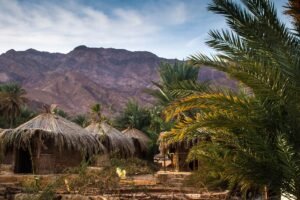
Ein Khudra is a palm oasis in a sheltered basin, linked to the sandy plateau above by the White Canyon. It has palm, acacia and olive trees, and a few Bedouin live there with their goats. Some tents welcome visitors with tea.
The name is often explained as meaning a place with many plants, which fits. Local tradition links the oasis with Hazeroth, a stop on the Exodus route mentioned in the Old Testament. That link is a legend rather than a proven fact, but it is part of the story you will hear.
On a canyon day this is where you sit down, drink sweet Bedouin tea in the shade and rest after the walking. It is greenest in winter after rain.
Why It Makes Sense to Do Both Canyons in One Day
The canyons are in the same desert area, they offer opposite experiences and the driving takes up a good part of the day either way. Doing only one means spending almost the same time in the car for half the walking. That is why a White Canyon Dahab day trip often includes the Colored Canyon as well, plus Mushroom Rock and Ein Khudra.
The Colored Canyon, White Canyon and Ein Khudra trip runs from 8:30 to 17:00, about 8.5 hours:
- Pickup from your hotel anywhere in Dahab.
- Land Cruiser drive into the desert.
- The Colored Canyon walk with your Bedouin guide.
- The White Canyon and Mushroom Rock.
- Bedouin tea at the Ein Khudra oasis.
- The drive back to Dahab and drop-off at your hotel.
Included are Land Cruiser transfers, a Bedouin guide and lunch. Tips are not included. Expect walking on sand and rock, narrow passages and a few short climbs: normal fitness and grippy shoes are enough. Bring a hat, sunglasses, water, sunscreen and a light layer for the shade. You can check the time, what’s included and the current price on the trip page and book there on WhatsApp. There is no prepayment; you pay in cash on the day.
Other Canyons and Wadis Near Dahab
If you enjoy the canyon day, there are other valleys worth a day from Dahab. Both have a different character from the Colored and White canyons.
Wadi Weshwash
Wadi Weshwash is a narrow granite canyon near Nuweiba with freshwater pools. You walk in with a Bedouin guide and swim or jump only where the water is deep enough. Water levels change through the year, because winter rain feeds the pools. The Wadi Weshwash and Ras Shitan trip runs from 8:30 to about 18:00 and adds lunch and beach time at Ras Shitan. Bring shoes that can get wet and a dry bag. You can check the time, what’s included and the current price on the trip page and book there on WhatsApp.
Wadi Gnai
Wadi Gnai is a palm oasis south of Dahab where a dry valley meets the sea. There is no shore road, so you reach it by buggy across the desert or by boat. The Three Pools and beach buggy trip to Wadi Gnai combines a snorkel stop with driving your own buggy through the desert.
For the full list of desert days, see our Dahab desert trips, or read the things to do in Dahab guide for ideas beyond the desert. If you are planning several days in town, our Dahab itinerary for 3, 5 or 7 days shows how a canyon day fits around sea trips and rest.
Trips in this guide
 Colored Canyon + White Canyon + Ein KhudraA guided walk through two desert canyons, ending at the Ein Khudra oasis.See the trip
 Wadi Weshwash + Ras ShitanSwim in the canyon pools of Wadi Weshwash, then spend the afternoon at Ras Shitan.See the trip
FAQ
Which is better, the White Canyon or the Colored Canyon?
They are different rather than better or worse. The Colored Canyon is a tight slot with striped red, yellow and purple walls up to about 40 m high. The White Canyon is a paler, more open valley with a ladder descent and a walk toward the Ein Khudra oasis. Because they are in the same area, many day trips from Dahab visit both, so you see the contrast in one day.
How hard is the Colored Canyon walk?
It is moderate rather than hard. The canyon is about 800 m long and the full route is under 3 km, but there are narrow, shoulder-wide sections and fallen boulders to climb over. There are no trails, steps or railings. Normal fitness and shoes with good grip are enough. People with knee problems or limited mobility should ask about the route before booking.
Is there a ladder in the White Canyon?
Yes. On the usual route you go down into the White Canyon through a crack in the wall using a ladder, at a point where the drop is roughly 12 m. Go slowly, keep three points of contact and pass heavy bags down rather than climbing with them. After that, the walk through the canyon takes about an hour.
How far are the canyons from Dahab?
The Colored Canyon is inland from Nuweiba, about 1.5 hours from Dahab by Land Cruiser, though the time depends on the route and conditions, so check before you go. The White Canyon and Ein Khudra are in the same desert area. The last part of the route is on sand tracks, so a 4×4 vehicle is needed.
What is the best time of year for the canyons?
October to May is the most comfortable time, with cooler air inland. From June to September it is very hot in the desert, so canyon trips start early while the walls still give shade. Winter has the bonus of a greener Ein Khudra oasis after rain. Whatever the month, carry plenty of water and wear a hat.
Are flash floods a risk in the Sinai canyons?
Flash floods are rare but real. Rain is uncommon in South Sinai, but when it falls it runs off the mountains quickly and can fill dry valleys and close roads, as happened in 2012. Guides and local authorities watch the forecasts. If rain is forecast, expect the trip to be changed or moved, and never enter a canyon alone in unsettled weather.
What should I wear for the canyon trip?
Wear trail shoes or trainers with good grip, light clothes that cover your shoulders and knees, a hat and sunglasses. Bring water, sunscreen and a light layer for the shade, plus a scarf or buff against the dust in the 4×4. A small backpack is best, because you may need to lift it over your head in narrow parts.
More Dahab guides
 Best time to visit DahabSea, wind and temperature month by month, and when each trip works best.Read the guide
 Dahab for solo travellersPractical tips for travelling alone in Dahab and which trips to join.Read the guide