Blue Lagoon Dahab and Ras Abu Galum: How to Get There
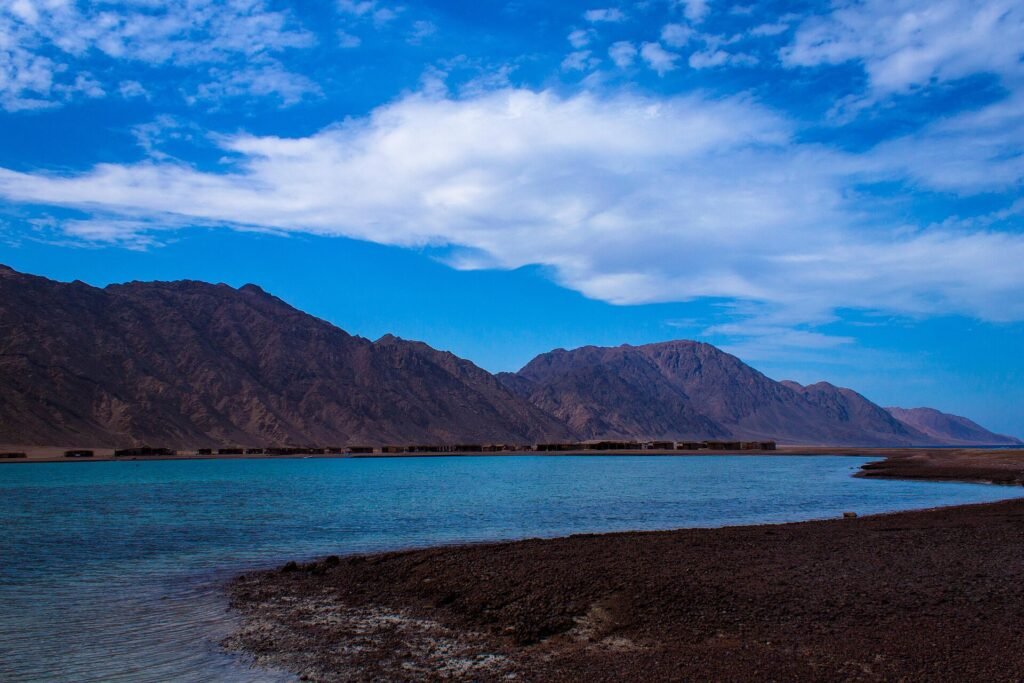
The Blue Lagoon Dahab visitors talk about is a shallow bay of white sand and turquoise water inside the Ras Abu Galum protected area, north of the Blue Hole. No road reaches it. You get there by boat or zodiac from the Blue Hole area, by walking the shore trail, or by camel, and most people combine it with snorkelling at the Blue Hole on the same day. This guide covers each way in, what the lagoon and Abu Galum are like, staying overnight, what to bring and how to plan the day.
Times and distances below come from travel guides and dive centres and are approximate. Conditions on this coast change with the wind, so check before you go.
What and where is the Blue Lagoon Dahab?
Dahab sits on the Gulf of Aqaba in South Sinai. North of town, the coast road runs past the dive sites to the Blue Hole, about 10 km away, and ends just beyond it. From there the coast continues north into Ras Abu Galum, a stretch of mountains, beaches and reef with Bedouin settlements and no road.
The Blue Lagoon is near the northern end of this stretch, roughly 16 km from Dahab town according to the travel blog We Seek Travel. It is a shallow, sheltered bay with pale sand, very clear water and bare mountains behind it. Simple Bedouin huts on the beach give shade. When people search for “Dahab Blue Lagoon” or “Blue Lagoon Dahab Egypt”, this is the place they mean, not the lagoon at the south end of Dahab town where the windsurfing schools are.
The Ras Abu Galum protected area
Ras Abu Galum was declared a protected area in 1992. The United Nations Development Programme in Egypt describes high coastal mountains, a narrow coastal plain and coral reefs. Published figures for its size range from about 425 to 500 square kilometres, and the Blue Hole itself lies inside the reserve. The Nubian ibex lives on the high peaks, though you are unlikely to see one from the beach. If you would rather not arrange the boat yourself, our Blue Hole, Abu Galum and Blue Lagoon trip from Dahab includes the boat ride and hotel pickup.
The protection is the reason the area still feels empty. There are no hotels and no paved road. The Bedouin families who live here run the boats, camels, small cafés and huts that visitors use.
Abu Galum village and the Blue Lagoon: two different places
People often use “Abu Galum” and “Blue Lagoon” as if they were one place. They are not.
Abu Galum (also spelled Abu Galoum or Abu Gallum) is the bay and Bedouin village you reach first coming north from the Blue Hole, with a sheltered cove and good reef. The Blue Lagoon is further north. The travel blog We Seek Travel describes a short pickup ride of about 10 minutes between the two, and boats can drop you at either.
Knowing the difference matters when you plan. If you walk from the Blue Hole, you reach Abu Galum first. On the Dahab Go trip, the zodiac carries on north through Ras Abu Galum and the free time is at the Blue Lagoon.
How to get to Ras Abu Galum and the Blue Lagoon
There are three ways in. The table gives a quick comparison, and each option is explained below. All times are approximate; check before you go.
| Way in | Start point | Approx. time | Good for | Watch out for |
|---|---|---|---|---|
| Boat or zodiac | Blue Hole area | about 20 minutes to Abu Galum | Most visitors, families, a combined day with the Blue Hole | A bumpy, wet ride when the wind is up |
| Walking the shore trail | Blue Hole | about 1.5 hours to Abu Galum | Fit walkers who want the coast at their own pace | Heat, no shade, loose stones in places |
| Camel | Blue Hole | similar to walking | A slower, traditional way along the same trail | Agree the route and return in advance |
By boat or zodiac from the Blue Hole area
This is the most common way. Bedouin boatmen use small speedboats and zodiacs from the Blue Hole area, and the Dahab dive centre Circle Divers gives the ride to Abu Galum as about 20 minutes. The boat runs north along the reef, close to the mountains, with clear views of the coast.
The ride is short but can be lively. When the north wind is blowing, the sea outside the reef gets choppy and you will get splashed. Keep your phone and camera in a dry bag, hold on, and sit further back if you prefer a smoother ride. If you have back problems or are pregnant, ask about the conditions before you set off.
Walking the shore trail
A coastal path runs north from the Blue Hole to Abu Galum between the mountains and the reef. Wikivoyage describes it as about 1.5 hours on foot, and the travel blog We Seek Travel puts it at about 5.5 km and describes it as mostly flat. It is not a technical walk, but it is fully exposed to the sun, with rocky sections where you need to watch your feet.
Walk it early in the morning, especially from May to September. Carry more water than you think you need, wear proper shoes rather than flip-flops, and cover your head. Some people take the boat one way and walk the other, which gives you both views of the coast without walking twice in the heat.
By camel
Before speedboats became common, camels were the usual way to reach Abu Galum, and you can still arrange a camel along the shore trail through a boat driver or a guide at the Blue Hole. Some Dahab dive centres also run camel dive safaris on this route. Agree in advance where the ride ends, how long you will stay, and how you will return, so there is no confusion later in the day.
What the Blue Lagoon is like
The lagoon is a wide, shallow bay of pale sand, protected from the open sea. On a calm day the water is clear and bright turquoise, and you can wade a long way out before it gets deep. Mountains rise steeply behind the beach. There are a few simple Bedouin huts and shaded seating, and little else.
The quiet is the main attraction. There is no road noise, no hotels and, the mobile signal can be weak or missing in many spots, so check before you go. Most people spend their time swimming, lying in the shade with tea, and walking along the sand. Because the bay is sheltered, experienced kitesurfers sometimes use it when the wind is right, so look out for kites if you swim further out.
There are no marked hiking trails at the lagoon. You can scramble up the slopes behind the beach for a view, but the ground is loose and the heat builds quickly in the middle of the day.
Swimming and snorkelling at Abu Galum and the Blue Lagoon
The two places are good for different things. The Blue Lagoon is best for swimming and floating in calm, shallow water. It has sand rather than coral in most of the bay, so it is not the main snorkelling stop.
Abu Galum is the better snorkelling area. Dive centres such as Circle Divers describe a sheltered cove with healthy hard coral in the shallows, and coral gardens in the northern part of the dive area. Turtles and larger fish are sometimes seen around the pinnacles in deeper water, though what you see on any one day depends on luck and conditions.
Snorkelling tips for this coast
- Enter and exit through sandy channels, never across the reef top.
- Do not stand on coral or hold onto it. If you need a rest, float on your back or return to the sand.
- Fins make swimming easier against a current. If you have your own, bring them.
- Weak swimmers should wear a life vest and stay close to the guide or a strong swimmer.
- If the sea is rough, stay inside the sheltered bays. Conditions can change during the day.
For more detail on the reef wall at the start of the day, read our Blue Hole snorkeling guide. If you want to compare Abu Galum with the reefs in town, our guide to the best Dahab snorkeling spots covers each one.
Staying overnight at Bedouin camps
Some visitors stay the night at Abu Galum or the Blue Lagoon. Bedouin families rent simple huts on the beach at both places. The travel blog We Seek Travel says there is no need to book in advance. Agree the price when you arrive, and check before you go, as this can change. Some hosts include meals, water and tea; ask what is included before you agree.
Facilities are basic, so ask about toilets, showers and electricity before you agree. There are no ATMs and no card payments, so bring enough cash for the whole stay plus a margin.
Mobile signal and internet are patchy or absent. The reward is a very dark sky and an empty beach in the early morning.
A few practical points if you stay:
- Bring a head torch, a warm layer for the evening, and a light sleeping sheet or sleeping bag liner.
- Arrange your return before the boat or camel leaves you. Confirm the time and the meeting point.
- Let your accommodation in Dahab know where you are going and when you plan to be back.
- Carry your passport, as you would anywhere in Sinai.
Camp details change from season to season, so check before you go. Dahab Go does not run overnight stays here; the Dahab Go trip is a day trip that returns to your hotel in the afternoon.
What to bring for Abu Galum and the Blue Lagoon
Beyond the Blue Hole there are only small Bedouin cafés and no shops, so pack the day the night before.
- Swimwear and a quick-dry towel.
- Plenty of drinking water, more than you think you need.
- Sunscreen, sunglasses and a hat. There is little natural shade.
- Snorkel mask and your own fins, if you have them.
- Cash in Egyptian pounds for the Blue Hole entry ticket, drinks and tips.
- A dry bag or zip bag for your phone on the boat.
- Walking shoes if you plan to hike the shore trail; water shoes for rocky entries.
- A light long-sleeved top to cover up after swimming.
- Your passport, for the police checkpoints on Sinai roads.
Respect the protectorate: leave no trace
Ras Abu Galum is protected, and it stays clean only because visitors and the Bedouin keep it that way. A few simple habits help.
- Take all your rubbish back to Dahab, including bottle caps, cigarette ends and fruit peel.
- Do not collect coral, shells or stones from the beach or the reef.
- Do not feed fish or wild animals.
- Use reef-friendly sunscreen and let it soak in before you swim.
- Ask before you photograph people, especially women and children.
- Dress modestly away from the water. Cover up when you walk into the village or sit in a café.
These are small things, but on a coast with no road, everything left behind stays there.
Combining the Blue Hole with Abu Galum and the Blue Lagoon
The simplest way to see everything in one day is to combine the Blue Hole reef wall with a boat ride north. That is how the Blue Hole, Abu Galum and Blue Lagoon day trip works.
How the day runs
The trip runs from 9:00 to 17:00, about 8 hours, with hotel pickup anywhere in Dahab. You start by snorkelling the Blue Hole reef wall from the beach, where the reef starts a few metres from shore. Then you ride a zodiac north along the coast to Ras Abu Galum, the protected area with no road, and finish with free time at the Blue Lagoon before the return.
What is included and what is not
Hotel transfers, a guide, a snorkel mask and the zodiac ride are included. The Blue Hole entry ticket is not included. It is a protectorate fee paid on site in cash; check the current amount before you go. Bring swimwear, a towel, sunscreen, water and cash, and your own fins if you have them.
Who the day suits
The day suits anyone who can swim and is comfortable on a small boat. You do not need any snorkelling experience; the guide shows you where to enter and where to swim. Weak swimmers should wear a life vest: a vest is not listed as included on this trip, so ask when you book or bring your own. If the wind is strong, the zodiac ride will be bumpier, so tell the guide in advance if that worries you.
You can check the time, what’s included and the current price on the Blue Hole and Blue Lagoon trip page, and book there on WhatsApp. There is no prepayment; you pay in cash on the day. For other days on the water, see all sea trips from Dahab, or the full list of Dahab day trips.
When to visit the Dahab Blue Lagoon
Dahab is sunny all year, so the lagoon is open to visitors in every season. In summer, the heat on the shore trail and the open beach is the main thing to plan around: go early, drink a lot and use the shade. In winter the air is cooler and the walk is more comfortable; bring a warm layer for the boat ride.
Wind matters more than the calendar. On calm days the boat ride is smooth and the water in the bays is clear. On windy days the ride is rough and visibility may drop.
If you have a few days in Dahab, keep this trip flexible and pick the calmest morning. If you are still on your way, our guide on how to get to Dahab covers the routes from Sharm, Cairo, Hurghada and Taba. For other ideas, see our guide to things to do in Dahab.
For the other beaches around Dahab, from the sandy Lagoon to Three Pools and Ras Shitan, see our Dahab beaches guide.
Trips in this guide
 Blue Hole + Abu Galum + Blue LagoonSnorkel the Blue Hole, then go up the coast to Abu Galum and the Blue Lagoon.See the trip
 All sea trips from DahabSnorkelling, yachts and boat trips along the Dahab coast.See all sea trips
FAQ
How far is the Blue Lagoon from Dahab?
The Blue Lagoon is roughly 16 km north of Dahab town, according to We Seek Travel. You drive about 10 km to the Blue Hole, where the road ends, then continue by boat, on foot or by camel into the Ras Abu Galum protected area. By boat, the ride north takes only a short time when the sea is calm. Check before you go.
Can you drive to the Blue Lagoon Dahab?
No ordinary road reaches it. The coast road ends just north of the Blue Hole, and Ras Abu Galum has no paved road. The usual ways in are a boat or zodiac from the Blue Hole area, walking the shore trail, or a camel. Local Bedouin pickups move between Abu Galum and the lagoon, but you cannot drive your own car there.
How long is the walk from the Blue Hole to Abu Galum?
Wikivoyage gives about 1.5 hours on foot along the coastal camel path, and We Seek Travel puts it at about 5.5 km, mostly flat. It is fully exposed to the sun, so start early, carry plenty of water and wear proper shoes. The Blue Lagoon is further north from Abu Galum. Times vary with fitness and heat, so check before you go.
Is the Blue Lagoon good for snorkelling?
The Blue Lagoon is best for swimming and floating in calm, shallow water, with sand across most of the bay. For snorkelling, the reefs around Abu Galum and the Blue Hole reef wall are better. The Dahab Go trip includes a snorkelling stop at the Blue Hole before the lagoon, so you get both on one day.
Can you stay overnight at Abu Galum?
Yes. Bedouin families rent simple huts on the beach at Abu Galum and at the Blue Lagoon. Facilities are basic, there is no ATM and no card payment, and the internet signal is weak or absent. Agree the price and what is included on arrival, bring cash and a head torch, and arrange your return in advance.
Do I need to pay an entry fee?
Visitors to the Blue Hole pay an entry ticket, which is a protectorate fee paid on site in cash. On the Dahab Go Blue Hole, Abu Galum and Blue Lagoon trip, this ticket is not included in the trip, so bring cash. The amount can change, so check the current fee before you go.
More Dahab guides
 Blue Hole snorkeling guideHow deep it is, where to swim and how to stay safe on the reef wall.Read the guide
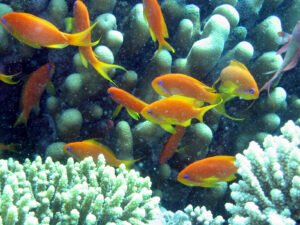 Dahab snorkeling spotsThe best reefs to snorkel from the shore, and how to reach each one.Read the guide
Photo credits
- Turquoise water of the Blue Lagoon in the Ras Abu Galum protected area, with the Sinai mountains behind — Mohamed3171979, CC BY-SA 4.0
- Snorkellers on the reef at the Blue Hole beach in Dahab — Grand Parc – Bordeaux, France, CC BY-SA 2.0
- Orange anthias fish over coral on a Dahab reef — Photo2222 (English Wikipedia), Public domain